
Pensacola International Airport's $113 Million Expansion: What It Means for Gulf Coast Travelers
On October 15, 2025, Pensacola International Airport broke ground on the most significant expansion in its 90-year history — a $113 million terminal expansion and modernization program that will add five new gates, 50,000 square feet of concourse space, and the capacity to handle millions more passengers annually. For Gulf Coast travelers weighing whether to fly into PNS versus alternatives like Destin-Fort Walton Beach (VPS) or Jack Edwards Airport (GUF) in Gulf Shores, this expansion changes the calculus — but not in every way you might expect. Here's an honest, question-by-question breakdown.
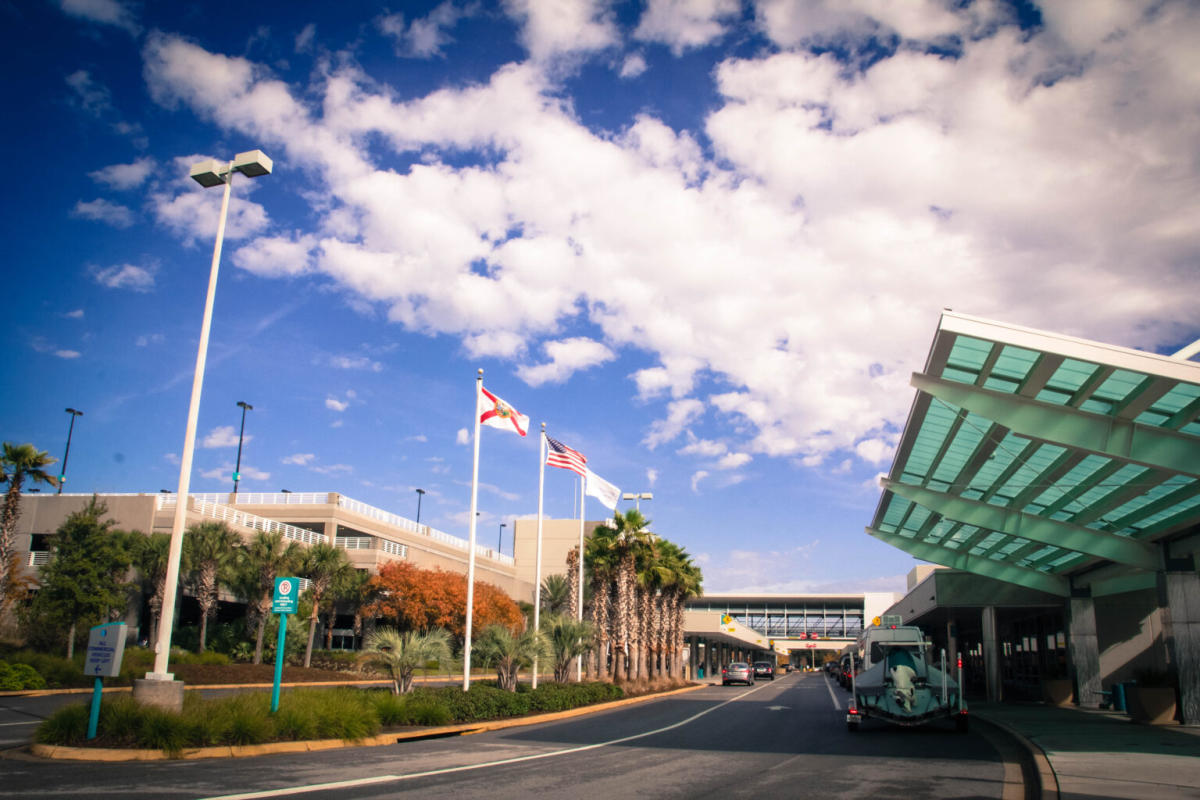
What's actually being built — and what isn't
One important clarification first: this is not a second terminal. The project is a 50,000 square foot terminal expansion adding a new five-gate passenger concourse with expanded security areas, more dining options, and upgraded amenities. The existing terminal is being expanded and modernized — not replaced or duplicated.
PNS currently has 12 gates and will expand to 17 gates under the program. The new concourse is designed to handle larger aircraft — a meaningful detail, since gate infrastructure that can accommodate wide-body jets opens the door to new airline service that couldn't physically operate at PNS before. The design is shaped by the sun and inspired by the dunes — incorporating Pensacola's history and culture into a modern, contemporary facility. Construction is being led by Archer Westen Construction (Atlanta) in partnership with Pensacola-based Bear General Contractors, with EXP as prime designer alongside Luis Vidal + Architects.
The project received $9 million in federal FAA Airport Improvement Program funding in May 2026, adding to the city's $150 million bond authorization. PNS also earned an A+ bond rating with a Stable Outlook from multiple rating agencies in fall 2025 — a signal of strong financial health that positions the airport to continue attracting airline investment beyond this immediate project.
Project timeline
-
APRApril 2025
Terminal Expansion and Modernization Program announced publicly. TransformPNS.com launched as dedicated project update site.
-
OCTOctober 15, 2025
Official groundbreaking ceremony. Construction begins. $113 million budget confirmed — up from earlier $70 million estimate as scope was refined.
-
MAYMay 2026
$9 million in federal FAA Airport Improvement Program funding approved, supporting gate additions, baggage handling upgrades, and security improvements.
-
20272027 (estimated)
Construction completion with phased openings planned to minimize passenger disruption during the build period.
Question 1: Will the expansion create more airline competition and lower fares?
Gate capacity is a real constraint on airline competition. When an airport has no available gates, new airlines literally cannot enter the market. PNS has been operating at 3.1 million passengers annually through a terminal designed for 1 million — meaning the airport has been running at or over practical capacity, which suppresses airlines' ability to add routes or frequencies. Adding five gates removes that constraint.
However, more gates do not automatically mean more airlines or lower fares. Airlines make route decisions based on passenger demand, slot availability, and market profitability — not just gate availability. What the expansion does is remove the physical barrier that has been limiting new entrants and additional frequencies. Whether new airlines take those gates depends on the market making commercial sense for them.
The most realistic near-term impact: airlines already serving PNS — particularly Southwest, Delta, and United — are more likely to add frequencies on existing routes rather than new airlines entering the market immediately. Increased frequency on existing routes does put modest downward pressure on fares through competition, since airlines compete against their own earlier departure times as much as against each other. Over a longer horizon, the expanded capacity makes PNS more attractive to airlines evaluating new markets — particularly carriers looking to establish Gulf Coast leisure routes.
Question 2: Will it offer more convenience through more direct flights?
The new concourse is specifically designed to accommodate larger aircraft. This matters because some nonstop routes that would be commercially viable at PNS are currently constrained by gate infrastructure that can't handle the aircraft type needed. Five new gates capable of servicing larger jets directly enables routes — and aircraft sizes — that weren't physically possible before.
PNS already connects to 28 destinations with 7 airlines as of mid-2026. The airport added several new nonstop routes in early 2026, including new Orlando service from Frontier, Breeze, and Spirit, and Southwest's new Baltimore/Washington nonstop starting June 2026. The expansion accelerates this trajectory — more gates, larger aircraft capability, and a more modern facility all make PNS more competitive when airlines are evaluating where to launch new routes.
For Gulf Coast travelers specifically, the most meaningful convenience gain will likely come from increased frequencies on existing routes (more daily departures from Atlanta, Houston, Dallas, Nashville) rather than entirely new destination cities, at least in the first 2–3 years post-completion.
Question 3: Will it give PNS a competitive advantage over VPS and Jack Edwards (GUF)?
PNS already serves 3.1 million passengers annually through 7 airlines with 28 nonstop destinations. VPS (Destin-Fort Walton Beach) and GUF (Jack Edwards, Gulf Shores) are substantially smaller markets with far fewer airline options. The expansion widens that gap rather than creating it.
| Airport | Airlines | Nonstop destinations | Annual passengers | Expansion status |
|---|---|---|---|---|
| PNS — Pensacola | 7 airlines | 28 destinations | 3.1 million | $113M expansion underway |
| VPS — Destin/Fort Walton | Multiple | Limited seasonal | Significantly smaller | No major expansion announced |
| GUF — Jack Edwards | 1 (Allegiant only) | 13 nonstops (seasonal) | New — commercial since May 2025 | New terminal under construction |
The competitive dynamic to watch: Jack Edwards is also building a new terminal and expanding its Allegiant route network. GUF's advantage is proximity to Gulf Shores and Orange Beach — a genuine and meaningful edge for travelers whose origin city Allegiant serves on the right days. But GUF's single-airline model and limited frequency are structural constraints that gate additions alone won't solve. PNS's multi-airline competition, daily frequencies, and now expanded infrastructure give it a durably stronger overall position for most travelers.
VPS serves a different geographic catchment area — primarily Okaloosa and Walton counties (Destin, Fort Walton Beach, Niceville). For travelers destined for those areas, VPS remains geographically closer. For Orange Beach, Gulf Shores, and Fort Morgan travelers, PNS is and remains the primary commercial airport of scale.
Question 4: Will it make PNS more cost-effective versus VPS and Jack Edwards?
Airfare is driven primarily by competition and demand, not terminal size. PNS already benefits from more airline competition than either VPS or GUF — seven airlines competing on overlapping routes creates more pricing pressure than a single-airline market. Adding gate capacity makes PNS more attractive to additional carriers, which could over time increase competition further and modestly compress fares.
The honest comparison: GUF's Allegiant fares can appear very low on a base-fare basis — Allegiant's ultra-low-cost model is designed for that. But the total-cost picture includes Allegiant's ancillary fees (carry-on bags, seat selection), limited frequency (if your dates don't align with flight days, you either pay for a different routing or lose out), and the risk premium of a single-airline market where a cancelled flight has no same-airline alternative. PNS's multi-airline competition generally produces more reliable all-in pricing for travelers who can't precisely align their dates with Allegiant's twice-or-three-times-weekly schedule.
Ground transportation cost is also part of the equation. PNS is 55–65 miles from Gulf Shores — a real cost difference versus GUF's 2-mile proximity. That gap doesn't disappear with the terminal expansion. The expansion makes PNS a better airport; it doesn't move it closer to the beach. For travelers choosing between airports on total door-to-door cost, that shuttle or rental car cost difference remains a legitimate factor.
What the expansion means for the passenger experience during construction
Construction through 2027 will mean some disruption — temporary congestion, modified traffic patterns, and the general inconvenience of an active construction zone adjacent to an operating terminal. Phased openings are planned to minimize disruption to travelers throughout the build period. PNS has been managing 3.1 million passengers through a 1-million-capacity terminal for years — the irony is that construction disruption may feel minimal compared to the existing overcrowding the expansion is designed to solve.
The bottom line: PNS's $113 million expansion is a significant, well-funded infrastructure investment that removes the physical constraints limiting airline growth at the airport. The clearest near-term benefits are improved passenger experience, larger aircraft capability, and increased frequency on existing routes. Fare compression and new airline entries are likely over a 3–5 year horizon as the new gates fill. The expansion reinforces PNS's already substantial competitive advantage over both VPS and GUF for most travelers — though GUF's proximity advantage for Gulf Shores-bound travelers with the right origin city and dates remains real and unchanged by what happens in Pensacola.
Flying into Pensacola? Able Airport Shuttle provides flat-rate service from PNS to Gulf Shores, Orange Beach, Fort Morgan, and Perdido Key — no surge pricing, flight tracking included. We'll be there when you land, through construction and beyond.
Book your shuttle →Related airline & airport guides
Sources: Pensacola Forward — PNS terminal expansion groundbreaking (November 2025); FOX10 TV — PNS breaks ground on terminal expansion (October 2025); WUWF Public Media — PNS terminal expansion cost update (September 2025); NorthEscambia.com — Terminal Expansion and Modernization Program announcement (April 2025); EXP — prime designer announcement (December 2025); Visit Pensacola — Airport Director update (March 2026); Funds for NGOs — PNS $9M federal funding approval (May 2026); FlightConnections.com — PNS route data (June 2026); TransformPNS.com — official project site.